


Your sponsorship here.
Policy Hawk Studies is piloting a sponsorship offer for organizations wishing to build and maintain visibility within the Canadian defence and security community.
For details, or to see how Policy Hawk Studies will maintain its editorial independence, click here.
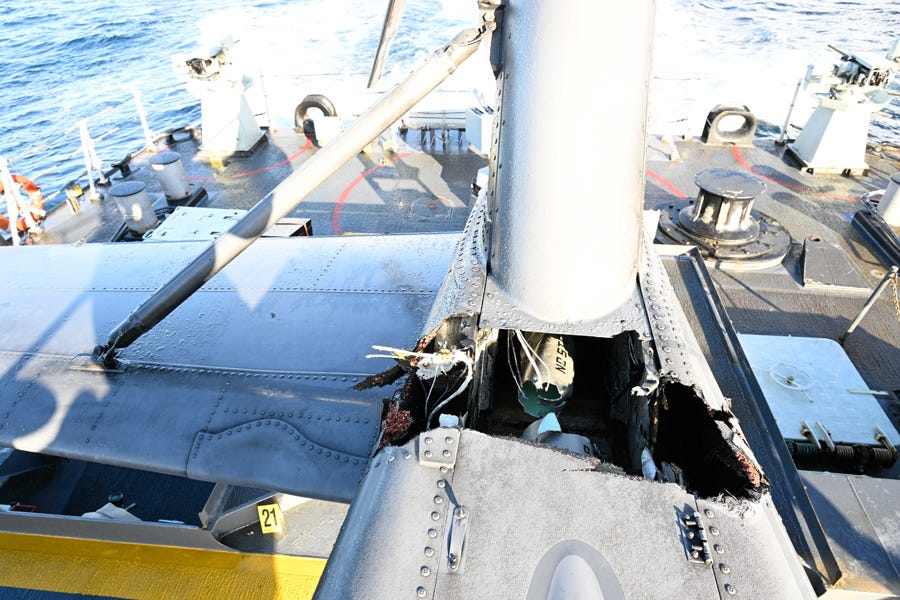
October 2026 was a rough month for Canada’s CH-148 Cyclone fleet. On October 6, a Cyclone landing aboard HMCS Ville de Québec in the Norwegian Sea struck its own tail boom with two main rotor blades, severing components including the tail rotor drive shaft. None of the four crew members was injured, but the helicopter sustained serious damage. The cause remains under investigation.
Twenty days later, a different Cyclone experienced a loss of power during takeoff at HMCS Discovery in Vancouver. It landed without injuries, but the incident prompted a temporary suspension of flying at 12 Wing, the home unit for the Cyclone fleet. DND subsequently cleared the fleet to resume operations after determining the problem was not fleet-wide. Once again, the cause remains under investigation.
Watch footage of the October 26 incident at HMCS Discovery.
Meanwhile, Lockheed Martin, the aircraft’s manufacturer, reported cumulative losses of approximately US$670 million on the Cyclone program in its October 22 quarterly filing. The filing says discussions with Ottawa about restructuring the contract continue, but warns that they could drag on, fail, or result in termination.
These three setbacks made for an unusually difficult month for the Cyclone, but they are only the latest in a long history of trouble for a fleet that reached initial operational capability in 2018. One of the earliest incidents, in February 2019, bears a striking resemblance to the October 6 incident. In that mishap, a Cyclone also struck its own tail with its main rotor blades during a hard landing aboard MV Asterix, after the ship had departed Hawaii. Repairs included replacing the tail pylon, two main rotor blades, and the left main landing gear. As in the October 6 incident, the crew evacuated without injury. The aircraft involved in the 2019 incident returned to flight on March 6 of that year.
A more tragic incident came on April 29, 2020, when a Cyclone operating from HMCS Fredericton crashed into the Ionian Sea, killing all six people aboard. Investigators identified a previously unrecognized interaction between pilot inputs and the aircraft’s automated flight-control system that prevented recovery during a low-altitude turn. They also identified shortcomings in operating documentation, procedures, and crew coordination. The fleet entered an operational pause that continued until June 16, when flying resumed with measures intended to prevent crews from encountering the same conditions. However, the causes of the crash raise questions about how the aircraft was developed.
Since then, at least two major structural issues have emerged. The first was the discovery of cracks in the tails of 21 Cyclones in 2021. Temporary measures were applied, but DND’s published timetable put completion of permanent repairs across the fleet in 2027. In 2022, a manufacturing issue affecting dozens of main rotor blades was also identified—an issue that took until June 2024 to resolve.
Throughout all of this, a scarcity of spare parts has kept aircraft availability low and led to another lengthy grounding of the entire fleet. That occurred in May 2025, when concerns that components might have been used beyond their prescribed service lives prompted an operational pause. Returning the first aircraft to service took nearly a month, with the air force indicating the remainder of the fleet would return one at a time over the subsequent months. However, that return to service does not appear to have brought the fleet back to full strength. As of the time of writing, roughly a third of the 27-aircraft fleet has not been publicly documented as flying since that operational pause. Most of those aircraft also appear to have been inactive when the pause began.
On top of these safety and availability problems, the fleet faces a growing interoperability challenge that impacts its effectiveness. The aircraft uses the relatively old Link 11 as its tactical data link — a key system for exchanging information such as unit positions, sensor data, and target tracks with other friendly aircraft and ships — despite Link 22, its successor, already being introduced by allies as Canada brought the Cyclone into service. NATO retired the Link 11 standard on December 31, 2024. Retiring the supported standard does not mean the Cyclone’s installed equipment simply stopped functioning. However, it does mean that ships and aircraft are increasingly unlikely to carry equipment that can communicate directly with the aircraft through that link. The Cyclone increasingly depends on platforms such as the Halifax-class frigate, which retain the older equipment and can relay information between the Cyclone and aircraft or ships using newer networks. True North Strategic Review has reported that Lockheed Martin has asked for roughly $20 million per aircraft to integrate newer data links, an expense the Government of Canada appears reluctant to incur given the platform’s other problems.
All of this has contributed to a general impression that the Cyclone is a failure, something Vice-Admiral Angus Topshee addressed directly while commanding the Royal Canadian Navy when he called the aircraft a “colossal disappointment” and an “absolute lemon.” This is a frustrating place to reach in 2026 for a project with roots stretching back to the 1980s. Replacing the Cyclone outright increasingly looks like the only viable path towards the shipboard capability the RCN requires.
Deciding that the Cyclone needs replacing, however, invites at least two immediate questions. The more obvious one is what should replace it. Opinions about that are already legion, and while the answer is important to what aviation capability the RCN can take to sea on future deployments, here it will be left as a topic for another time.
Meanwhile, the second question has consequences well beyond the maritime helicopter fleet. What should Canada learn from the Cyclone experience, and how should those lessons shape future procurements? An unsuccessful program can reveal mistakes that should never be repeated. There is no doubt that there are such lessons to be learned from the Cyclone project. But drawing too broad a lesson can make viable and even necessary approaches to procurement taboo, while letting us avoid examining the decisions that led to the failure.
The Cyclone program’s most conspicuous feature is that Canada took a civilian product, Sikorsky’s S-92 helicopter, and commissioned a unique military variant, a shipboard maritime helicopter, that no other country operated and that would only ever be built in relatively small numbers — the full order was for 28 aircraft. There is no shortage of people in and out of the military who will argue that the lesson is to never attempt such an adaptation again and use the Cyclone as an example of why Canada should only ever buy “off-the-shelf” military equipment already in service elsewhere.
The challenge, of course, is that buying off the shelf is not always possible, and the options available can come with significant compromises.
Canada will sometimes have requirements that legitimately and significantly differ from those of its allies. Equipment designed around their needs will reflect their priorities, and accepting those choices can limit the missions Canada can perform or how effectively it performs them. These compromises are often matters of degree, but they are still compromises.
The Cyclone provides a reasonable case study of this complexity. Shipboard maritime helicopters are common throughout the world’s major navies, and Canada could have adopted an aircraft already in service elsewhere. However, every helicopter faces a trade-off between the mission systems it carries and the endurance available to use them. Mission equipment adds weight, competing with fuel and other payload within the aircraft’s operating limits. Equipping a helicopter for a wider range of tasks will, all else being equal, therefore reduce how long it can spend performing any one of them.
Navies have several ways to manage this trade-off. Those generally operating close to home can rely on shore-based assets to provide some capabilities, allowing their helicopters to carry less equipment. Those deploying task groups can distribute demands among several helicopters, particularly when the group includes a ship designed to carry multiple aircraft. More aircraft also allow one to remain on task while another returns to refuel, mitigating lower endurance.
Canada’s operating pattern makes those solutions less appealing. It routinely deploys combatants for months at a time to theatres thousands of kilometres from its shores, generally sending a single frigate carrying a single maritime helicopter. That helicopter may need to perform a wide range of missions without another Canadian aircraft available to take over. Accepting less versatility can leave the ship without a capability it needs at some point during its deployment, while accepting less endurance will limit how effectively it uses the capabilities it carries.
In this situation, there is a strong argument for a third path. A larger, more expensive helicopter could carry all the mission equipment with less of a penalty to endurance. For most navies, with other ways of managing the trade-off between capability and endurance, this isn’t worthwhile. But Canada’s operating pattern with frigates deployed independently far from home makes it an outlier in how it could benefit from this approach.
The issue, of course, is that if few navies pursue this approach, few aircraft will be designed around it. Arguably, none of the helicopters in military service with Canada’s allies fit the nation’s needs. The closest was likely what is now called the AW101, co-developed by the UK and Italy and actually in service with Canada in a land-based search and rescue role as the CH-149 Cormorant. However, adopting this aircraft aboard ships presented a political challenge for a Liberal government that included several members who had been part of cancelling an order for that helicopter in the same role just over a decade earlier.
With the government unwilling to accept the embarrassment of reversing that earlier cancellation, the only options available were to accept a significantly inferior shipboard helicopter capability or develop something new that was specifically tailored to Canada’s needs.
There is nothing wrong with the assessment that no helicopter perfectly matched Canada’s needs and that Canada stood to benefit more than most navies from a helicopter tailored to its needs. But identifying a potential benefit is only the first step. It still has to be weighed against the cost and risk of obtaining it. This is where the Cyclone project probably should have died.
Adapting a civilian helicopter for maritime warfare was always going to be expensive and involve significant risk. However, the Auditor General’s 2010 report found that National Defence had understated the project’s developmental nature. The procurement was presented as non-developmental, yet its specifications contained nearly 3,000 technical requirements and the initial acquisition contract included $612 million in one-time engineering costs. Presenting the project as non-developmental understated the cost and risk of producing what officials later acknowledged would be a helicopter that had never existed before.
Understating the development work made the project easier to approve and made it appear that fewer resources would be needed to manage it. That underestimation helps explain why the first aircraft arrived more than six years late.
National Defence should not have presented the project in this way. However, it’s also reasonable to infer that the government was thinking too much about political risk. The political cost of revisiting the AW101 appears to have weighed against it. The government may also have seen political risk in approving a less capable helicopter and given the more ambitious Cyclone proposal less scrutiny than it warranted.
These are clearly factors that have contributed to the issues that the Cyclone project has had. However, they are not inherent to civilian-to-military adaptations. Had those decisions been handled differently, it is entirely possible that the project could have delivered an operationally capable — if still expensive — maritime helicopter to the CAF. A deeper analysis would likely find other issues that, if addressed, could have made the project successful. The Cyclone, therefore, does not support the argument that Canada should limit itself to procuring “off-the-shelf” equipment. In fact, accepting that argument would mean throwing out the baby with the bathwater, as it would imply that there is no purpose in trying to learn the more nuanced lessons from the Cyclone project that could help make future civilian-to-military conversion procurements successful.
Civilian designs can provide an effective basis for military equipment, including for small, specialized fleets. Examine the military adaptations of Bombardier’s business jets. Multiple countries have taken commercially produced aircraft and integrated the equipment needed for specialized military missions. Canada is now negotiating to acquire one such adaptation, Saab’s GlobalEye airborne early warning and control aircraft. Its Canadian-manufactured Global 6500 platform is part of what makes the proposal attractive, both as an aircraft and as an opportunity for Canadian industry. The underlying commercial aircraft allows a specialized military fleet to draw on an industrial foundation far larger than its own orders could support.
The GlobalEye acquisition is not universally loved, of course. But Boeing’s E-7 Wedgetail, its most popular alternative, is also a military adaptation of a civilian aircraft — the Boeing 737. And while orders from Australia, South Korea, Turkey, the UK, and the US may give the impression of a large fleet, completed deliveries and currently contracted orders for the E-7 only add up to 24 airframes, which is fewer than the 28 Cyclones Canada ordered. Civilian-to-military adaptations can be effective at fleet sizes Canada can achieve on its own, in many cases.
Canada will need to undertake adaptations of its own.
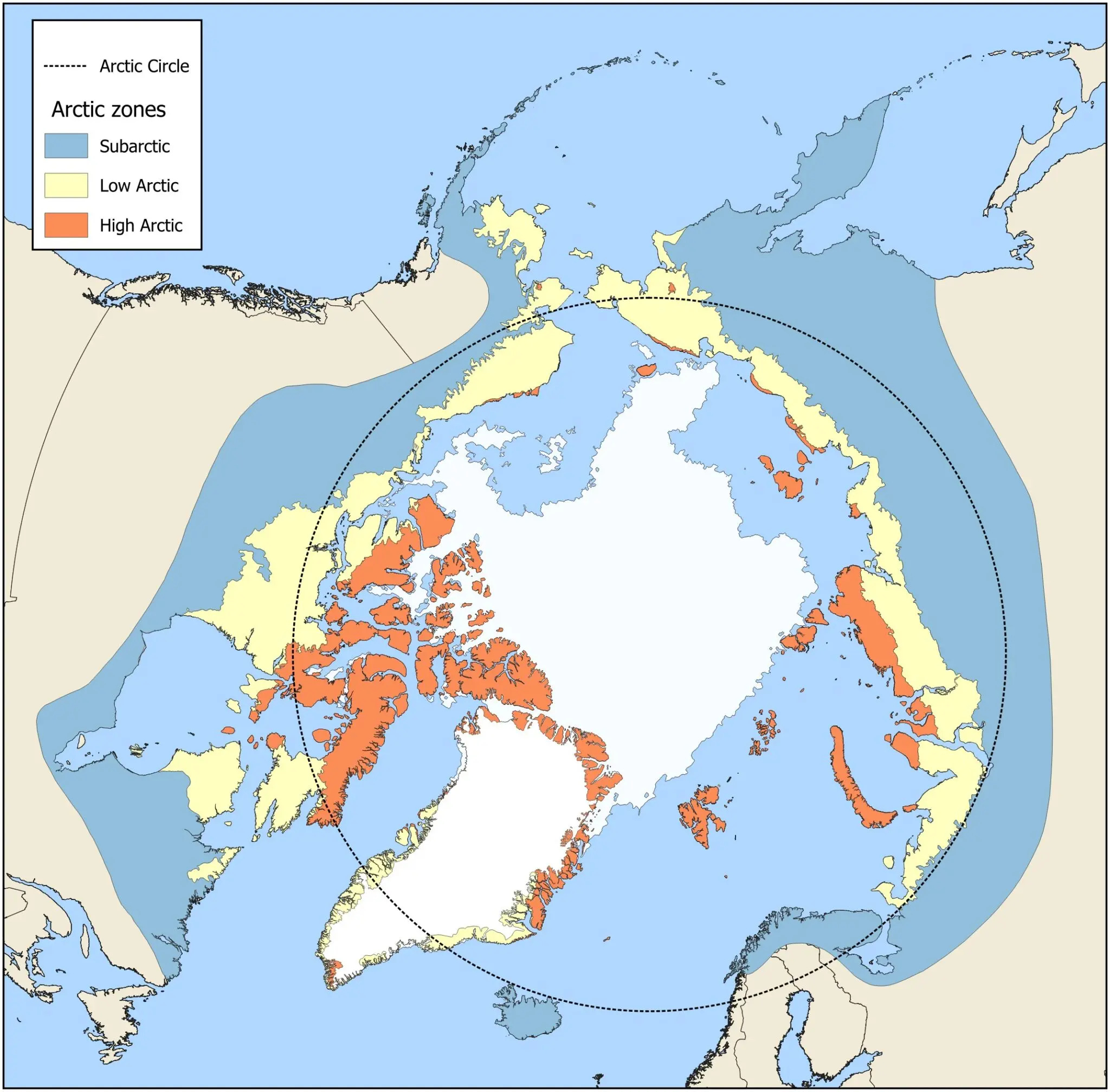
While the necessity of a unique shipboard maritime helicopter for Canada is debatable, the country clearly has other interests that are unique. The Arctic contributes significantly to this, as the Canadian Arctic combines severity and expanse with a fractured archipelago in a way no other Arctic nation has to contend with. A polar map of the Arctic, showing distinctions between various Arctic zones, demonstrates this:
The distances Canada must cover to reach its most important potential conflict areas are also unusually long. The United States deals with comparable distances in large part through its network of overseas bases, a strategy Canada cannot emulate. This creates another source of unique requirements that may push Canada towards developing its own solutions.
Admittedly, converting civilian designs to military use is not the only way to develop domestic equipment. An existing civilian design can provide a production line, an established supplier network, and years of operating experience that would be expensive to recreate for a small military fleet. The commercial market has already paid for much of the underlying product and continues to sustain its manufacture. While that does not necessarily make civilian-to-military adaptations easy, where that product provides a suitable foundation, they are generally easier than developing a new piece of equipment entirely from scratch. All of those arguments were made with respect to the Cyclone, but they were convincing because they are true.
Canada must also consider whether its allies can actually supply the equipment they produce. An ally may lack the production capacity to meet both its own needs and Canada’s. Canada could not, for example, have bought US-made Arleigh Burke-class destroyers instead of building its own River-class. In other cases, a country may simply be unwilling to export specific equipment to Canada. The US has historically been Canada’s largest supplier, but it did not make the F-22 fighter available for export when it was in production and has not made the new B-21 bomber available to other countries. And risks around long-term support and sustainment must also be considered. The long waiting list for Patriot missiles offers a current example, as do cases where orders that customers have already paid for appear to be going undelivered on the agreed terms.
Another aspect to consider is that Canada can simply no longer afford to purchase the bulk of its equipment from other nations. This is not because of a weakening financial position, but because of significantly higher spending commitments. When Canada’s defence budget was around 1% of GDP and only 13% of that miserly budget was devoted to major equipment purchases, it did not matter if nearly all of that money was spent in other countries. However, with Canada committed to spending 3.5% of its GDP on defence by 2035, with reasonable estimates putting major equipment expenditures as high as 30% of that total, the arithmetic changes. At those levels, major equipment purchases would account for 1.05% of GDP, roughly eight times the 2014 share of 0.13%. The economic headwinds created if most of that spending were to leave the country every year, with nothing of direct economic value returning, are simply unsustainable. Canada must largely rely on its own industries for major equipment purchases to achieve and sustain its military spending commitments. With many aspects of Canada’s defence ecosystem still in their early stages, that will mean adapting civilian designs for military use, at least in the early generations of domestic equipment design.
It is a side benefit of the fiscal reality that creating such domestic defence industrial capacity also has military value. The ability to maintain, repair, modify, and replenish equipment determines how much control Canada retains over the capability it has purchased. During a crisis, foreign production lines and repair facilities will face urgent demands from their own governments. Domestic expertise and capacity give Canada more options when it needs to return damaged equipment to service, change a system to meet a new threat, or replace stocks being consumed faster than expected.
The government has already made these connections. Canada’s Defence Industrial Strategy aims to increase the share of defence acquisitions awarded to Canadian firms to 70 per cent. Its Build–Partner–Buy framework prioritizes domestic production, followed by collaboration with international partners where we have a say in the project’s structure, and then purchases from abroad. How quickly Canada will put this framework into practice remains to be seen, but the strategy shows that the government recognizes the problem.
Together, these issues make it all but certain that Canada will have good reasons to adapt civilian equipment for military use again. It may well become the nation’s default approach, for a time. Treating civilian adaptations as a mistake in themselves makes it harder to develop the expertise Canada will need to manage them well. The failures of the Cyclone project should not be celebrated but, if we reject the idea that they are a sign that the general approach of civilian-to-military adaptation is flawed, they can provide valuable insight into what we must do for future projects to succeed.
Canada is a very conservative country in its appetite for risk. This is, perhaps, an area where it would be valuable to look to industries with significant recent innovation success for inspiration. In US tech culture, experience with failure is often treated as a pre-requisite for success. For a time, in San Francisco (before it failed), there was even a conference called FailCon devoted to this concept. At it, venture capitalist Vinod Khosla argued that earlier failures helped prepare founders like Jack Dorsey and Max Levchin for their later successes. Someone with experience with failure is more likely to succeed if they try again, than someone new. The idea applies here too. A team that has had to find out why a project went wrong can bring something valuable to its next attempt at something, provided it changes how it works.
The US Navy offers a closer parallel. In 2009, the US cancelled the VH-71 presidential helicopter program after spending close to US$3 billion. Its auditors examined what the follow-on program could learn from the failure. The Navy tried again, this time using Sikorsky’s S-92, the same civilian helicopter Canada used as the basis for the Cyclone. The Navy kept the S-92’s civil airworthiness certification and integrated the required mission systems without introducing new critical technologies. The resulting VH-92A reached initial operational capability in 2021, and the Navy reported that the program remained under budget. The mission was different from Canada’s, but the second attempt shows what a different approach to an adaptation can achieve after an expensive failure.
The Cyclone has also given Canada experience it did not have when it signed the contract. Canadian teams have helped bring a heavily adapted aircraft through testing and certification, introduced it into service in stages, and operated and maintained it at sea. They have seen what happens when the availability of spare parts limits flying and when a mission system needs to keep pace with standards changing across an alliance. That experience can help Canada ask better questions of suppliers, set more realistic schedules, and work out who will support the equipment once it is in service. In short, it makes Canada’s next civilian-to-military adaptation more likely to succeed, provided Canada applies what it learned from the Cyclone to decisions on that project.
Even if the Cyclone does need replacing, the choice of a successor remains open. Whether that specific program is one where Canada should adapt another civilian helicopter, or even try again with the S-92, is not the point of this piece. Canada might instead decide to acquire an existing maritime helicopter with a different set of compromises. That choice needs to be judged on its merits.
Sooner or later, almost certainly sooner, adapting a civilian design will again be the best way to give the Canadian Armed Forces a capability it needs. If the only lesson we take from the Cyclone is to never do anything like it again, we’ll arrive at that decision having spent billions learning things we’ve chosen to forget.
Thanks for reading! What do you think Canada should replace the Cyclone with? Let me know in the comments.
If you found this useful, please like it or share it with someone who might be interested. That helps this work reach more readers.
You can also subscribe for free or become a paid supporter. Everything I publish will remain free; subscriptions and one-time tips simply help me write more often.
Thanks!
Well, this whole debacle began when Jean Chretien decided on a campaign whim to cancel the Cormorant acquisition. What followed was a foolish attempt to find a replacement. In the meantime, Canada lost about 400 high tech jobs in Montreal developing the back end electronics and had to pay about $500 million in cancellation fees. This what happens when you elect a jerk.
The CAF has long struggled with a lack of funding, relatively unique doctrine shaping geography and political meddling within its procurement programs. The Cyclone was subjected to all of these and suffered greatly for it. Our doctrine and geography necessitates a large, long ranged helicopter that carries all of its sensor systems independently from its warship. This is a substantial niche only really matched by the Royal Navy and their Merlin, while also obviously requiring a number of expensive, difficult and complex decisions for the aircraft itself.
The chronic lack of funding also meant not enough aircraft were purchased to equip both land and sea deployments, stretching the fleet and providing little room for losses/attrition to be absorbed. This also meant spare parts were not adequately procured and the equipment aboard the aircraft was allowed to atrophy into a questionably modern state.
Political meddling screwed the RCAF out of the most capable, off the shelf aircraft in the Merlin, so we were forced to either accept a doctrinal shift/less capable aircraft or enter into a painful process of building our own unique, bespoke orphan helicopter design.
We're effectively back at the same point where we started back during the Sea King replacement, saddled with a barely functional money pit but this time, we don't even have the spare parts and logistics chain of the Sea King to rely on.
I think a serious question needs to be raised, does the RCN/RCAF adjust their operational requirements and doctrine to fit an aircraft like the Seahawk that most of the world operates, or do we again embark upon purchasing an expensive, complex and large ASW helicopter for our specific requirements? Something needs to be done sooner rather than later, because the Cyclone is actively crippling the RCN/RCAF's ASW capability.
The same can be said for domestic construction, I feel the urgent operational requirements of the CAF should overrule the strict requirements for a domestically produced aircraft at this point.
A 70% solution with much lower costs and a wide, shared operational and developmental base might be the solution versus a 100%, bespoke and expensive platform at the end of the day here.